 EN
EN

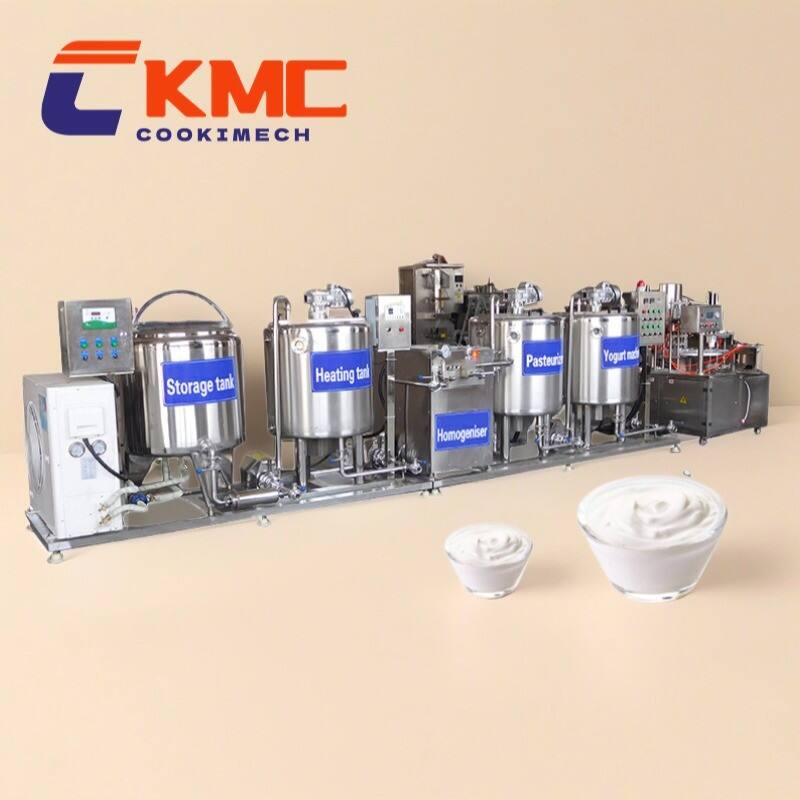
The Yogurt Machine as the Automation Catalyst in Modern Dairy Lines
From Batch Fermentation to Integrated End-to-End Processing
Traditional yogurt production relied on disjointed manual operations—pasteurization, inoculation, fermentation, and cooling occurred in isolated stages. This fragmentation led to inconsistent texture and flavor, limited scalability, and elevated risk of batch failure. Modern yogurt machines eliminate these bottlenecks by unifying the entire workflow into a single, automated line—from raw milk intake to finished packaging. Embedded pH, temperature, and viscosity sensors monitor fermentation in real time, while programmable controllers dynamically adjust thermal profiles to maintain precise culturing conditions. This closed-loop control replaces error-prone manual sampling and has reduced batch failures by 27%, per 2024 industry benchmarking data from the International Dairy Federation (IDF). By eliminating transfer delays and manual handoffs, integrated systems enable high-capacity production without sacrificing consistency, traceability, or regulatory compliance.
How the Yogurt Machine Enables Cross-Unit Synchronization (Pasteurization → Inoculation → Fermentation → Packaging)
The yogurt machine’s strategic advantage lies in its ability to orchestrate interdependent unit operations across the production floor. Using industrial IoT protocols like OPC UA, it synchronizes pasteurization vats with fermentation tanks—ensuring heat-treated milk flows directly into inoculation units at optimal temperatures, bypassing unnecessary cooling lag. PLC-driven actuators then inject starter cultures with micron-level precision before transferring the mixture into fermentation chambers. Once target viscosity thresholds are met, integrated sensors trigger automated valves to route yogurt directly to filling machines. This seamless cascade eliminates transitional bottlenecks and cuts idle equipment time by 41%, according to operational audits conducted by the U.S. Dairy Export Council. Digitized material handoffs reduce product exposure, minimize waste, and support modular expansion—enabling rapid scaling without re-engineering core infrastructure.
Core Automation Capabilities of the Yogurt Machine
Real-Time Fermentation Control via Embedded pH, Temperature, and Viscosity Sensors
Modern yogurt machines embed high-fidelity sensors for pH, temperature, and viscosity directly within the fermentation vessel—delivering continuous, millisecond-resolution data to the central controller. If pH drops faster than the validated fermentation curve, the system automatically adjusts cooling to slow acidification and prevent over-fermentation. Temperature is stabilized within ±0.5 °C using adaptive heating/cooling loops; viscosity readings confirm gel formation meets target specifications before transfer. This real-time responsiveness eliminates reliance on lab-based sampling, reduces batch variability, and ensures consistent acidity and mouthfeel across all production runs—even at full throughput. Operators monitor progress remotely via an intuitive dashboard, and pre-set alert thresholds initiate corrective actions autonomously, safeguarding quality before deviations occur.
Seamless Integration with MES and PLC Systems for Unified Process Oversight
The yogurt machine serves as a connected node—not a standalone unit—within a broader automation architecture. It communicates bidirectionally with upstream and downstream equipment using standard industrial protocols (OPC UA, Modbus), feeding sensor and actuator data into the plant’s Manufacturing Execution System (MES). This creates a unified, time-stamped process timeline spanning pasteurization to packaging. PLCs coordinate real-time actions: when fermentation completes, the PLC signals the filler to start and the cooling tunnel to ramp up—no human intervention required. Should the MES detect an anomaly—such as a chiller temperature deviation—the system can hold yogurt in the fermentation vessel until resolution, preventing off-spec product. This integration enables recipe-driven flexibility (e.g., switching between set-style and stirred yogurt) with a single command, eliminating manual recalibration and supporting agile, demand-responsive scheduling.
Food Safety and Quality Assurance Driven by the Yogurt Machine
Automated CIP Validation and AI-Powered Contamination Detection
Food safety is embedded—not bolted on—through two complementary layers of automation. First, Clean-in-Place (CIP) validation is fully automated: conductivity, flow rate, and temperature sensors verify cleaning completeness after every cycle. Any parameter deviation triggers an automatic line halt and operator alert—removing subjectivity from sanitation verification and ensuring consistent HACCP compliance. Second, AI-powered inspection uses synchronized vision cameras and near-infrared sensors to scan yogurt in real time for foreign bodies, clots, phase separation, or discoloration—flagging anomalies within milliseconds. Together, these systems form a proactive, dual-layer defense that reduces recall risk, strengthens audit readiness, and maintains throughput without compromising safety standards.
Measurable Operational Impact: Efficiency, Labor, and ROI
The yogurt machine delivers quantifiable economic value by optimizing three core levers: throughput, labor, and yield. Automation consolidates oversight—enabling one operator to manage multiple process stages—while precise fermentation control minimizes rework and improves solids retention. End-to-end synchronization shortens cycle times by up to 33%, accelerating order fulfillment and increasing daily output capacity. As a result, per-unit production costs decline significantly. Most dairy processors report payback within 12–24 months, driven by labor savings, reduced waste, and higher asset utilization. Post-payback, the system generates sustained operational savings—and positions facilities to meet evolving food safety regulations, customer traceability demands, and sustainability targets with greater agility.
FAQ
What is the role of sensors in modern yogurt machines?
Sensors embedded in yogurt machines monitor critical parameters such as pH, temperature, and viscosity in real-time, allowing for precise fermentation control and reduced batch variability.
How does the yogurt machine improve production consistency?
By automating processes like pasteurization, inoculation, fermentation, and packaging within an integrated system, the yogurt machine minimizes manual errors and ensures consistent product quality.
What benefits does end-to-end automation bring to dairy manufacturers?
End-to-end automation reduces equipment downtime, improves traceability, minimizes waste, and enhances scalability, while also cutting production costs through labor and energy efficiencies.
Can yogurt machines handle different types of recipes?
Yes, modern yogurt machines support recipe-driven flexibility. Operators can switch between different yogurt styles like set-style and stirred with simple commands, without needing manual recalibration.
How does automation impact food safety in yogurt production?
Automation integrates CIP validation and AI-powered contamination detection, ensuring consistent sanitation and proactively identifying quality issues, which reduces the risk of recalls.
Table of Contents
- The Yogurt Machine as the Automation Catalyst in Modern Dairy Lines
- Core Automation Capabilities of the Yogurt Machine
- Food Safety and Quality Assurance Driven by the Yogurt Machine
- Measurable Operational Impact: Efficiency, Labor, and ROI
-
FAQ
- What is the role of sensors in modern yogurt machines?
- How does the yogurt machine improve production consistency?
- What benefits does end-to-end automation bring to dairy manufacturers?
- Can yogurt machines handle different types of recipes?
- How does automation impact food safety in yogurt production?