 EN
EN

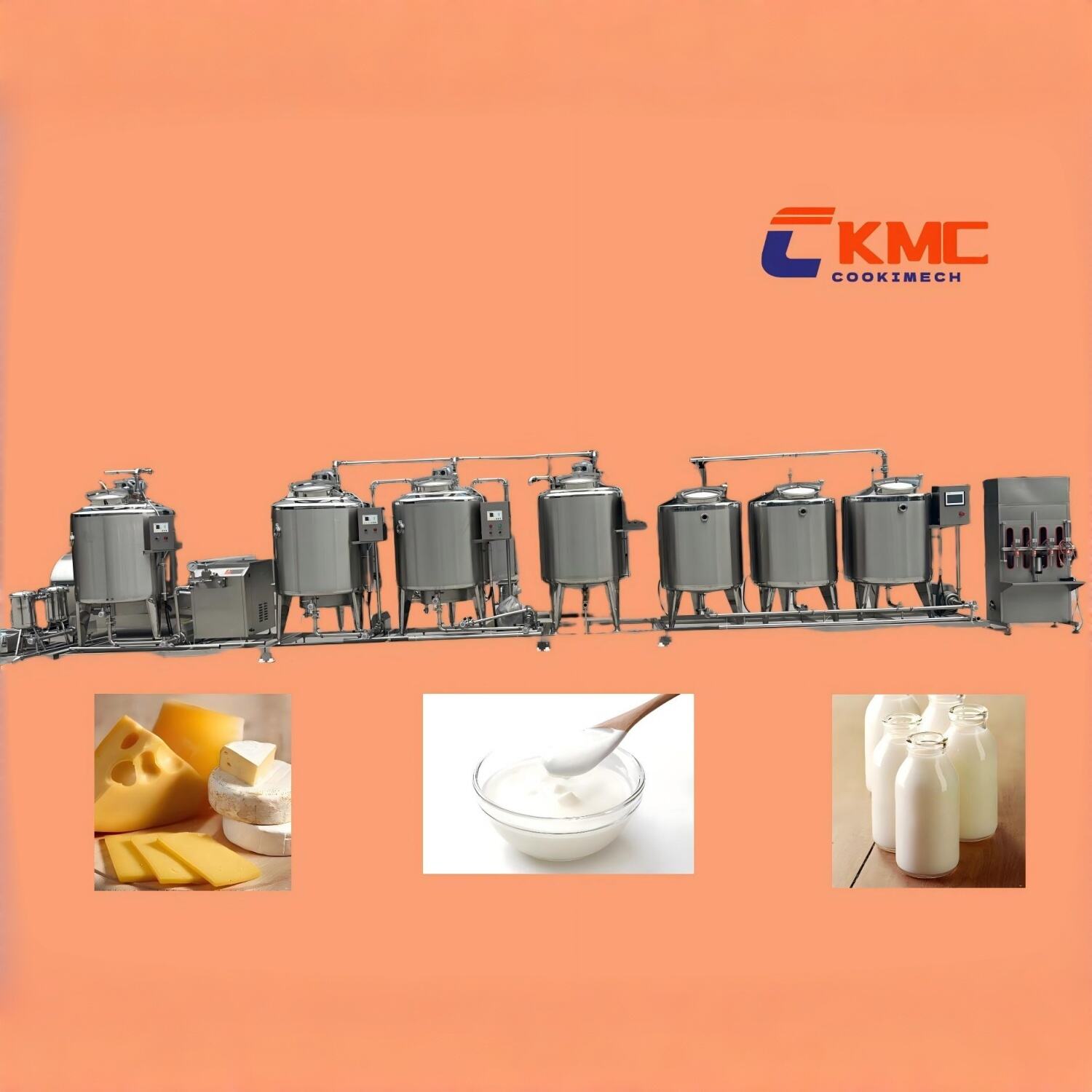
Superior Corrosion Resistance in Acidic Yogurt Production
Withstanding Lactic Acid Exposure Without Degradation
Stainless steel yogurt machines maintain structural integrity during prolonged exposure to lactic acid (pH ~4.0), a critical requirement for fermentation. The chromium-rich passive oxide layer prevents ion leaching that could contaminate dairy products. Studies confirm 316L stainless steel exhibits <0.1 mm/year corrosion rates in lactic acid environments at 40°C—well below the 0.5 mm/year threshold for food-grade safety compliance (Materials Performance Report 2023). This inertness ensures no metallic transfer alters yogurt’s taste, texture, or probiotic viability.
Electro-Polished Finish Reinforcing the Passive Oxide Layer
Electro-polishing creates a microscopically smooth surface (Ra < 0.4 μm) that enhances the natural chromium oxide barrier. This process removes embedded iron particles that initiate rust, increases surface chromium concentration by 30–35%, and reduces bacterial adhesion sites by 90% compared to mechanically polished finishes. The optimized surface prevents micro-pitting corrosion from acidic whey proteins, extending equipment lifespan by 8–10 years in high-volume facilities.
When to Specify 316 Over 304 Stainless Steel for Critical Yogurt Machine Components
While 304 stainless suffices for non-acidic components, 316/L is essential for:
| Application | Reason for 316/L Specification | Risk with 304 |
|---|---|---|
| Salted yogurt vats | Molybdenum (2–3%) resists chloride ions | Pitting from brine solutions |
| CIP systems | Withstands bleach/acid sanitizers | Stress corrosion cracking |
| Fruit infusion chambers | Tolerance to citric/malic acids | Localized crevice corrosion |
The 316L variant’s low carbon content (<0.03%) prevents carbide precipitation during welding—crucial for tanks and pipelines subjected to thermal cycling during pasteurization and cooling. This specification reduces maintenance costs by 40% in facilities producing >10,000 liters daily (Dairy Processing Journal 2024).
Hygienic Design and Regulatory Compliance for Food-Safe Yogurt Machines
Meeting FDA, USDA, and 3-A Sanitary Standards Out of the Box
Stainless steel yogurt machines inherently satisfy FDA CFR 21, USDA Dairy Grade Standards, and 3-A Sanitary Standards SSI-03 due to their non-porous surfaces and material inertness. This compliance eliminates post-installation retrofitting, accelerating deployment in regulated facilities. The alloy’s resistance to chemical corrosion ensures consistent performance during sanitation cycles using caustic or acidic detergents. Certification is achieved through radius corners, polished welds (Ra ≤ 0.8 μm), and crevice-free joints built into fabrication—not added later.
Seamless Construction and Drainable Geometry to Eliminate Biofilm Risk
Continuous welds and self-draining slopes (>3°) prevent microbial adhesion points in fermentation tanks and transfer lines, aligning with EHEDG Guideline 8 principles. Full drainage capability reduces moisture retention by 92% compared to flat surfaces (Journal of Dairy Science 2023), critically impeding biofilm formation. Angled valve housings and minimized gasket interfaces further eliminate residual product traps after CIP cycles.
Thermal Stability and Non-Reactive Performance During Fermentation & Pasteurization
Preserving Probiotic Viability and Flavor Integrity via Inert Surface Interaction
Stainless steel yogurt machines maintain critical non-reactive properties during thermal processing, preventing metallic ion transfer that compromises probiotic cultures. The alloy’s inert surface ensures lactic acid bacteria remain unaffected by chemical interactions during fermentation—preserving both microbial viability and delicate flavor compounds. Unlike reactive metals, 316L-grade stainless eliminates risks of catalytic degradation even during extended pasteurization at 85°C–95°C, meeting ISO 22000 food safety protocols for bioactive preservation.
Optimized Thermal Conductivity for Uniform Heat Distribution in Yogurt Machines
Precise temperature control defines successful yogurt production, where ±1°C deviations impact texture and culture activity. Stainless steel’s balanced thermal conductivity (15 W/m·K) enables gradual, even heat penetration without hot spots during pasteurization—unlike copper (400 W/m·K), which risks localized overheating. Its low thermal expansion coefficient (16 µm/m·°C) maintains structural integrity during rapid CIP sanitization cycles, ensuring consistent performance across 10,000+ operational hours.
CIP Compatibility and Operational Reliability in High-Volume Yogurt Production
Smooth, Sloped, Valve-Free Surfaces Enabling Full Automated Clean-in-Place Cycles
For high-volume yogurt production, Clean-in-Place (CIP) compatibility is non-negotiable for hygiene and operational efficiency. Modern yogurt machines eliminate biofilm risks through smooth, electropolished surfaces and continuous slopes that prevent residue accumulation. Valve-free designs remove crevices where contaminants could hide, while optimized geometry ensures complete drainage of cleaning agents. This enables fully automated CIP cycles that meet FDA and 3-A Sanitary Standards without manual disassembly. Such designs reduce cleaning time by up to 40% compared to traditional equipment (Food Safety Journal 2023), supporting consistent operational reliability through thousands of cleaning cycles—critical for 24/7 facilities where downtime costs exceed $740k annually (Ponemon 2023).
FAQ
Why is 316L stainless steel preferred for yogurt production equipment?
316L stainless steel is preferred due to its superior corrosion resistance, especially in acidic environments like those found in yogurt production. It contains molybdenum, enhancing resistance to chloride ions, and its low carbon content prevents carbide precipitation during welding.
How does electropolishing improve stainless steel surfaces?
Electropolishing creates a microscopically smooth surface, enhancing the chromium oxide layer, increasing surface chromium concentration, and reducing bacterial adhesion sites. This process also prevents micro-pitting corrosion from acidic whey proteins.
What are the benefits of seamless construction in yogurt machines?
Seamless construction prevents microbial adhesion, with continuous welds and self-draining slopes eliminating biofilm risk. This design reduces moisture retention and aligns with EHEDG guidelines, enhancing hygiene and operational efficiency.
How does stainless steel maintain probiotic viability during yogurt production?
Stainless steel maintains probiotic viability by offering non-reactive surfaces that prevent metallic ion transfer, ensuring lactic acid bacteria remain unaffected during fermentation and pasteurization processes.