 EN
EN

Why Industrial Fryer Design Must Prioritize Frozen Food Throughput
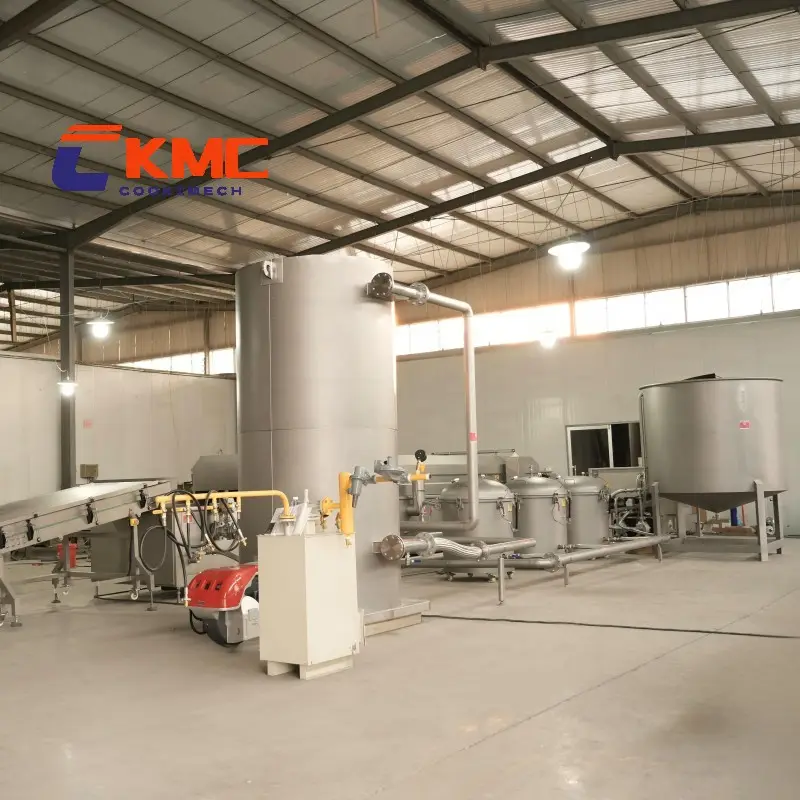
Thermal Inertia Management for Rapid, Stable Frozen Load Cycling
When frozen items at minus 18 degrees hit hot oil around 180 to 200 degrees Celsius, the temperature plummets by over 30 degrees right away. Industrial fryers need serious heating power to keep things running smoothly. Systems like burners rated at least 2.5 megawatts or induction coils work best when paired with good oil circulation throughout the system. With these setups, fryers can recover heat within about 45 seconds and stay stable within half a degree Celsius even when processing 500 kilograms per hour continuously. Get this balance wrong and food comes out with soggy centers or greasy surfaces, which leads to roughly 8 to 12 percent more waste according to recent findings published in Food Processing Journal last year.
Robust Materials and Sealing for Continuous High-Moisture, High-Fat Environments
When frozen foods hit hot oil, they create intense steam explosions and fat seepage that quickly wears down regular stainless steel equipment. That's why most industrial fryers opt for 316L stainless steel or go with nickel alloy coatings on their tanks, conveyor belts, and other key parts where the metal needs to hold up against corrosion from constant exposure to 200 degree Celsius oil. For all those sealing spots like hatch doors and drainage valves, triple layer fluoropolymer gaskets are the norm these days. These gaskets have been tested over 10 thousand times without failing, which is pretty impressive considering how much money facilities lose annually from oil leaks causing slips and falls. According to the Ponemon Institute report from last year, such incidents cost around seven hundred forty thousand dollars per year in downtime alone. And let's not forget about those enclosed hood systems with built-in condensation drains that cut down on floating particles in the air by almost all of them, keeping workplaces clean enough to meet OSHA regulations for indoor air quality.
Precision Temperature Control in Industrial Fryer Systems
PID-Controlled Oil Bath Stability (±0.5°C) Across 180–200°C Operating Range
The PID control system has become standard practice for keeping oil bath temperatures stable within about half a degree Celsius across the 180 to 200 degree range. Regular thermostats just can't match this kind of precision. PID controllers actually respond to changes in heat demand around 50 times quicker than traditional methods, which matters a lot when dealing with cold ingredients going into hot oil. Without this fast reaction time, the oil temperature would drop suddenly, causing problems like undercooked food or too much oil getting absorbed. Maintaining consistent temperature keeps moisture levels in the final product below 3 percent, something that really affects how the food feels in the mouth and how long it stays fresh on store shelves.
Real-Time Thermocouple Mapping for Uniform Heat Distribution
The network of multi-point thermocouples creates real time temperature maps throughout the oil bath area, spotting any spots where temperatures vary more than 2 degrees Celsius from what they should be. If there's a hotspot forming somewhere or an area getting too cold, the system will tweak the heating power for those specific zones and adjust how fast the conveyor moves all within about two seconds to bring everything back into balance. On frozen vegetable production lines, this means vegetables come out consistently crispy around the edges without burning, so most products meet quality standards even during busy periods when things are moving at maximum speed.
Key Performance Metrics:
Continuous Frying Systems: Ensuring Output Consistency in Frozen Food Lines
Dwell Time Calibration to Achieve Target Crispness (±3% Moisture Variance)
Dwell time—the precise duration of oil immersion—is the most direct lever for controlling texture and moisture in frozen food frying. At industrial scale, ±15-second deviations can push moisture variance beyond 10%, producing either soggy or over-dried outputs. Modern continuous systems resolve this through three integrated capabilities:
- Real-time laser sensors, measuring product dimensions and surface ice distribution before entry;
- Algorithm-driven conveyor modulation, dynamically adapting speed to compensate for thermal load fluctuations;
- Post-fry inline moisture analyzers, feeding closed-loop corrections back to dwell time parameters.
This orchestration eliminates reliance on manual timing and delivers the micro-bubbled crispness consumers expect—even when processing highly variable frozen inputs—aligning throughput rigorously with quality benchmarks.
Integrated Frying Process Strategies: Thaw-Fry vs. Flash-Fry for IQF Products
Thermal Shock Mitigation in Direct-to-Fry Frozen Applications
IQF products come with their own set of thermal challenges. When moving from frozen state straight into hot oil, problems like moisture shifting inside, surface blisters forming, and inconsistent browning often occur. Thaw-fry approaches help avoid these issues by letting items defrost before frying, which cuts down on splattering and gives better control over how much oil gets absorbed. But there's a catch too. The extra time needed for thawing means longer processing times overall, plus there's always that worry about bacteria growing while food sits waiting. Flash-frying skips the thaw step altogether, dropping IQF items right into the fryer. This keeps production lines running fast and saves energy, though it requires careful temperature control. Things like PID controllers for heat regulation, strong oil circulation systems, and proper timing adjustments all work together to keep temperature differences below 30 degrees Celsius. Recent tests on both potato and seafood IQF lines have shown that when done right, flash-frying maintains product structure, delivers consistently crispy results, and actually cuts waste by around 11 percent compared to traditional thaw-fry methods.
FAQ Section
What is the significance of thermal inertia management in industrial fryers?
Thermal inertia management is crucial for maintaining rapid and stable processing of frozen loads, ensuring that the fryers recover heat quickly and maintain consistent cooking temperatures.
Why do industrial fryers use 316L stainless steel or nickel alloy coatings?
These materials provide superior resistance to corrosion, essential for withstanding the harsh conditions of high-temperature oil and steam in industrial frying environments.
How does PID control improve fryer performance?
PID control allows for precise temperature regulation, quickly adjusting to changes in heat demand to maintain stable oil temperatures and ensure consistent product quality.
What benefits does flash-frying offer over thaw-frying for IQF products?
Flash-frying avoids the need for thawing, reducing processing times and energy use while maintaining product quality and structure.