 EN
EN
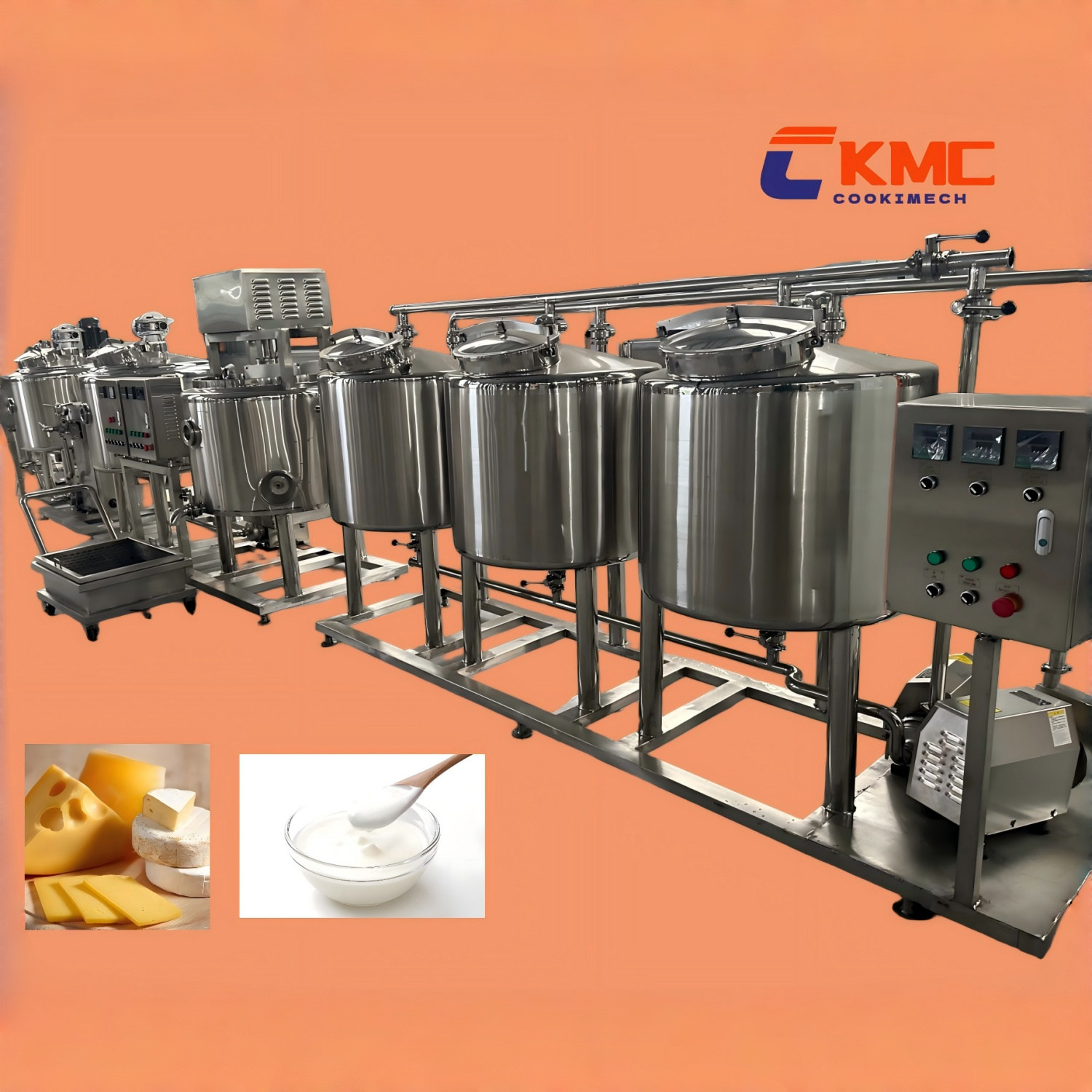
Superior Hygiene Assurance via Integrated CIP Cleaning
How Full-Stage CIP Eliminates Biofilm in Yogurt Fermentation Tanks
Integrated Clean-in-Place (CIP) systems deliver unmatched hygiene in yogurt production through automated, multi-stage protocols. The process begins with high-velocity pre-rinsing to dislodge residues, followed by precisely timed chemical cycles: caustic solutions dissolve organic matter, while acidic stages neutralize mineral deposits. Unlike manual cleaning, CIP reaches every internal surface—including valves, sensors, and transfer lines—via programmable spray heads. This eliminates biofilm niches where spoilage or pathogenic bacteria like Lactobacillus and Streptococcus thermophilus proliferate. Real-time verification sensors confirm cleaning efficacy between batches, preventing contamination carryover. According to the 2023 EU Dairy Hygiene Compliance Report, manufacturers adopting automated CIP reported a 40% reduction in product recalls.
Data-Backed Microbial Reduction: Insights from EU Dairy Hygiene Audits (2023)
Recent audits across European commercial dairies quantify CIP’s microbial control in yogurt fermentation environments:
| Pathogen | Reduction Rate (%) | Cleaning Method |
|---|---|---|
| Listeria monocytogenes | 99.8 | Automated CIP |
| E. coli | 99.7 | Automated CIP |
| Salmonella spp. | 99.9 | Automated CIP |
| Same pathogens | 85–92 | Manual cleaning |
Source: EU Dairy Hygiene Compliance Report 2023
These results reflect CIP’s repeatable temperature control (70–85°C) and precise chemical dosing—conditions essential for achieving near-sterile surfaces and preserving probiotic viability. Integrated sterilization phases sustain aseptic integrity throughout production, while automated documentation supports compliance with FDA 21 CFR Part 117 and EU Regulation (EC) No 852/2004.
Proven Operational Efficiency Gains with Automated CIP
Labor Savings and Faster Batch Turnaround in Commercial Yogurt Production
Automated CIP transforms facility workflows by eliminating manual equipment disassembly and scrubbing. Labor requirements drop by up to 70%, redirecting staff to value-added production tasks. Cleaning cycle times shrink by 40–50%, accelerating batch turnover—enabling one major yogurt machine manufacturer to add three full production cycles per day without expanding floor space. Consistent, error-free execution replaces variability inherent in manual sanitation.
Optimized Water and Energy Use Across Multi-Stage CIP Cycles
Intelligent CIP technology delivers resource efficiency through phased optimization:
- Water conservation: Closed-loop systems recycle 60–80% of rinse water
- Energy reduction: Targeted thermal controls maintain exact temperatures only when required
- Chemical precision: Flow sensors dispense calibrated volumes, reducing consumption by 30%
Sequenced cycles—pre-rinse, caustic wash, acid neutralization, final rinse—outperform manual methods, lowering utility costs by 22% per tonne of yogurt produced, according to industry benchmarking studies.
Scalable Production Flexibility Enabled by Modular Tank Design
Seamless Reconfiguration for Probiotic, Greek, and Drinkable Yogurt Lines
Modular tank systems dramatically increase production agility. Operators switch between probiotic, Greek, and drinkable yogurt formats within hours—not days—by reconfiguring standardized components. EU Dairy Hygiene Audit data (2023) shows facilities using modular designs reduced annual changeover downtime by 73% while maintaining full hygiene compliance. Quick-release mechanisms enable tool-free reconfiguration, supporting rapid seasonal launches or limited-edition runs. Production capacity scales incrementally by adding fermentation modules during demand surges—eliminating the need for costly new lines. This pay-as-you-grow model shrinks capital risk and prevents underutilized assets, while conserving water, energy, and cleaning resources across diverse product portfolios.
Risk Mitigation: How CIP + Modularity Prevents Cross-Contamination
Cross-contamination remains a critical vulnerability in multi-product yogurt facilities—especially where allergens, starter cultures, or residual ingredients threaten batch integrity. Integrated CIP mitigates this risk through automated, validated sterilization cycles: precision-timed chemical rinses and high-temperature sprays eliminate human error in manual sanitation. When combined with modular tank design—which provides physical separation between production zones—facilities achieve true compartmentalization: dedicated, non-shared spaces for probiotic, Greek, or lactose-free lines. This dual strategy—automated hygiene assurance plus structural isolation—ensures robust compliance with FDA and EU dairy regulations while significantly reducing recall exposure. One yogurt machine equipped with both features cut cross-contamination incidents by 92% within six months of implementation.
FAQ
What is Clean-in-Place (CIP)?
Clean-in-Place (CIP) is an automated cleaning method used in industrial processes, particularly in food and beverage production, where internal surfaces of equipment and pipelines are cleaned without disassembly.
How does CIP prevent biofilm in yogurt production?
CIP prevents biofilm by using high-velocity rinsing, caustic solutions, acidic cycles, and programmable spray heads to clean every internal surface where bacteria may propagate.
What are the advantages of automated CIP over manual cleaning?
Automated CIP provides unmatched hygiene, reduces labor costs by up to 70%, speeds up cleaning cycles by 40–50%, and ensures consistent cleaning results without human error.
Does CIP reduce cross-contamination risks?
Yes, CIP minimizes cross-contamination risks through validated sterilization processes, while modular tank designs provide structural isolation to compartmentalize production zones.
How efficient is CIP in minimizing resource usage?
CIP conserves resources with closed-loop systems that recycle water, precise thermal controls to reduce energy usage, and flow sensors that minimize chemical consumption.