 EN
EN
What Is a Yogurt Machine? Defining the Integrated Automation Core
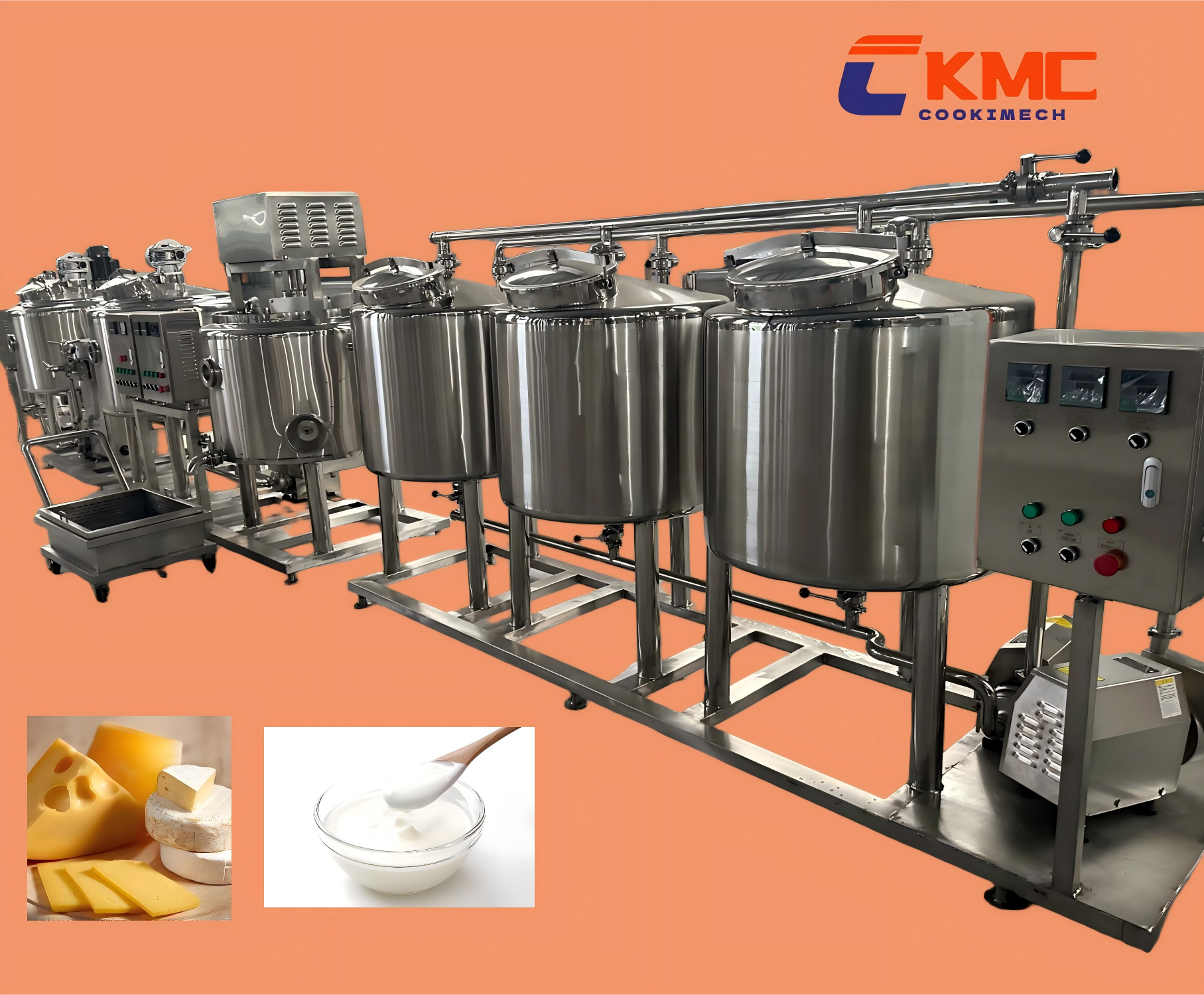
A yogurt machine is an integrated automation system that unifies multiple production stages under a single control core. Unlike standalone equipment handling only one task—such as pasteurizing or filling—the modern yogurt machine connects every process, from milk intake to sealed packaging, through a centralized computer interface. This holistic approach reduces operational complexity, eliminates manual handoffs between separate machines, and enables real-time, cross-line adjustments.
Beyond Single-Function Equipment: The Yogurt Machine as a Unified Processing Hub
Traditional yogurt production relied on isolated units for pasteurization, fermentation, cooling, and packaging—each operated independently. A yogurt machine replaces this fragmented setup with a seamless, synchronized framework. Sensors and AI-driven controllers continuously monitor temperature, pH, acidity, and flow rates, automatically adjusting parameters without operator intervention. For example, if fermentation slows, the system extends incubation time while signaling downstream fillers to modulate speed. This integration cuts changeover time by up to 30% and prevents quality drift caused by process silos.
Key Components: Pasteurization, Fermentation, Filling, and Packaging in One System
Four core modules operate in sequence within the yogurt machine:
- Pasteurization: Heats milk to 85–95 °C for precise pathogen reduction, with tight thermal control and hold-time validation.
- Fermentation: Adds starter cultures and maintains 42–44 °C until target pH (typically 4.4–4.6) is reached—monitored in real time.
- Filling: Aseptically doses cultured yogurt into cups or pouches using volumetric precision calibrated to ±0.5 g.
- Packaging: Applies hermetic seals and labels, with inline vision systems verifying seal integrity and label placement.
All modules are governed by a central controller that enforces quality checkpoints—measuring viscosity, fill weight, and seal strength—ensuring only compliant product advances to the next stage.
How a Yogurt Machine Automates the Full Production Flow
Modern yogurt machines transform dairy processing into a fully automated, end-to-end sequence—reducing human intervention while elevating precision, repeatability, and responsiveness. Each stage integrates closed-loop control systems, enabling consistent quality from raw material intake to finished goods. By bridging traditionally disjointed processes, automation delivers measurable gains in throughput, hygiene, and traceability.
Stage 1: Raw Milk Handling to Cultured Base — Precision Pasteurization & AI-Guided Fermentation
Automated milk reception feeds raw material directly into high-temperature, short-time (HTST) pasteurizers calibrated to 85 °C ±0.5 °C. Real-time sensors track temperature, conductivity, and viscosity, feeding data into AI algorithms that dynamically adjust fermentation profiles. This adaptive control keeps pH deviation within ±0.1 units across batches, delivering standardized pre-yogurt bases on schedule—without manual recalibration.
Stage 2: Aseptic Filling and Sealing — Synchronized with Real-Time Quality Monitoring
High-speed volumetric fillers dispense cultured yogurt while inline rheometers and particle analyzers monitor consistency and homogeneity. PLC feedback loops instantly correct fill volume or dwell time if deviations exceed tolerance. Near-real-time seal integrity scanning operates at Six Sigma reliability (99.9997% fault detection), validated against NSF/ANSI Standard 151 for food equipment hygiene. Vision systems reject non-conforming containers based on micro-tear detection thresholds—verified during third-party audit cycles.
Operational Benefits of Deploying a Yogurt Machine
Labor Efficiency: 92% Reduction in Manual Handling (Nordic Dairy Co. Case Study)
A fully integrated yogurt machine automates the most repetitive and physically demanding tasks—milk transfer, temperature logging, vat movement, and manual filling. At Nordic Dairy Co., deployment reduced manual handling by 92%. Operators shifted from hands-on monitoring to supervisory oversight via a unified HMI interface, freeing staff for higher-value responsibilities like sensory evaluation and new-product development. Labor savings alone delivered ROI within 18 months.
Consistency & Yield: Batch-to-Batch Uniformity and 12% Higher Product Recovery
Automation eliminates variability in temperature curves, fermentation duration, and fill accuracy—delivering near-perfect batch-to-batch uniformity in texture, acidity, and set time. Gentle transfer design minimizes shear-induced whey separation and product loss during filling. Nordic Dairy Co. achieved a 12% increase in usable yield from the same raw milk input—a direct result of reduced mechanical stress and tighter process control. This dual advantage strengthens brand consistency while improving margin per unit.
Compliance, Safety, and Scalability in Yogurt Machine Implementation
Yogurt machines must comply with global food safety and equipment standards—including FDA 21 CFR Part 117, EU Regulation (EC) No 852/2004, and ISO 22000—to operate legally and safely. Manufacturers build them with hygienic, electropolished stainless steel (316L grade), full CIP/SIP capability, and digital traceability logs that record every batch’s thermal history, pH profile, and quality gate outcomes. Scalability is engineered into the architecture: modular fermentation tanks, parallel filling lanes, and expandable control nodes allow capacity increases without full-line replacement. Regular validation—per ASME BPE and 3-A Sanitary Standards—ensures performance remains consistent across production volumes. Without these embedded compliance and scalability features, operators face elevated risk of regulatory nonconformance, costly recalls, or stranded capital investment.
FAQ Section
What is a yogurt machine?
A yogurt machine is an integrated automation system used in yogurt production. It combines processes like pasteurization, fermentation, filling, and packaging under one centralized control system to streamline operations.
How does a yogurt machine improve efficiency?
A yogurt machine eliminates manual handoffs, reduces process variability, and incorporates real-time monitoring and AI-driven adjustments to improve efficiency, consistency, and yield.
What are the main components of a yogurt machine?
The main components are pasteurization, fermentation, filling, and packaging modules. These components work together under a single control system to optimize the production flow.
Why is compliance important for yogurt machines?
Compliance with global standards ensures product safety, quality traceability, and legal operation. Adherence to standards like FDA and ISO regulations is critical to avoid recalls and penalties.
Can yogurt machines scale with increasing production demands?
Yes, most yogurt machines are designed for scalability. Modular components and expandable systems allow manufacturers to increase capacity without replacing the entire setup.