 EN
EN
Matching Capacity and Automation of Egg Washing Machines to Your Operational Scale
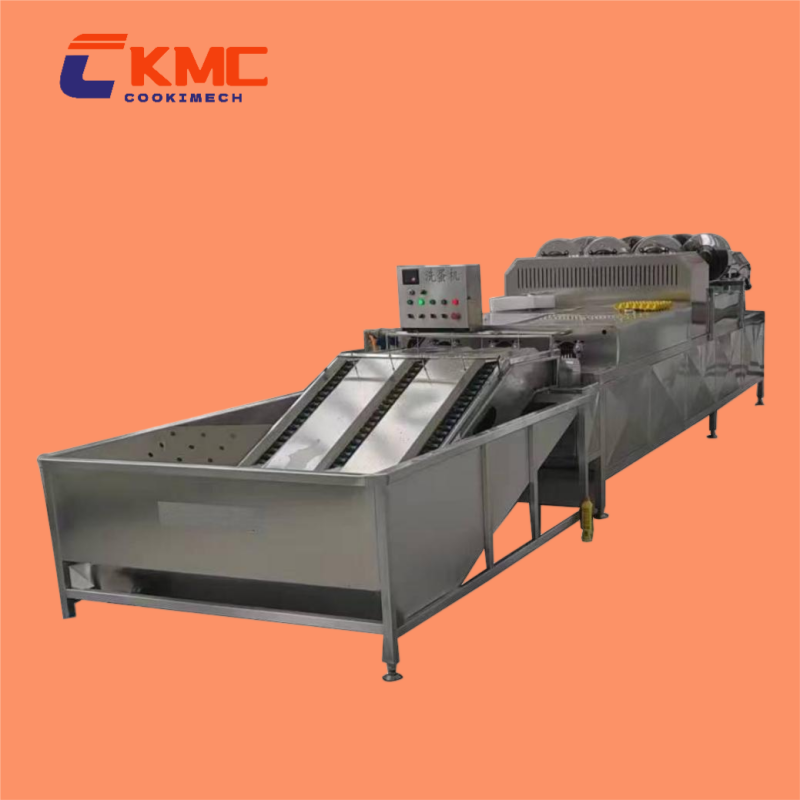
Small-Scale Farms vs. Commercial Processing Plants: Throughput Requirements for Optimal Egg Washing Machine Selection
When it comes down to picking the right egg washer, how many eggs need cleaning each day is what really matters most. For smaller operations that handle less than 3,000 eggs a day, farmers usually go for those compact machines that aren't fully automatic but still get the job done reliably with simple wash cycles and manual loading. On the flip side, big commercial facilities dealing with tens of thousands of eggs every hour have no choice but to invest in those long tunnel systems connected to conveyor belts so everything keeps moving smoothly without getting backed up. Getting this right means saving money in the long run too many businesses end up spending way more than they should on oversized equipment while others struggle because their machines just can't keep up with demand.
Automation Tiers Explained: From Manual Feed to Fully PLC-Controlled Tunnel Egg Washing Machines
The amount of automation has a big impact on how efficient workers are, how consistent processes stay, and what kind of costs pile up over time. Basic machines still need people to load them manually with items and rely on simple timed wash cycles. These work well when money is tight and there's not much volume to handle. Moving up the scale, mid range systems start using conveyors for feeding parts and automatically measure out chemicals, cutting down on hands-on work by around forty percent. At the top end we find those fancy PLC controlled tunnel systems that handle everything from washing to rinsing, sanitizing, and drying all in one go while keeping track of performance numbers as they happen. Sure, they cost more upfront, but companies often save about thirty five percent on running costs in the long run because they dose chemicals so accurately, cut down on having to fix mistakes, and just generally produce fewer defective items overall.
Ensure Food Safety with Proven Cleaning Efficacy and Validated Stages
Effective egg sanitization hinges on a scientifically validated, multi-stage process—one that eliminates pathogens without compromising the egg’s natural protective barrier.
The Five Critical Stages of Egg Washing: Pre-Wash, Wash, Rinse, Sanitize, and Dry — and Why Each Matters
- Pre-Wash: Loosens and removes surface debris using warm (~100°F) water, preventing contamination carryover into subsequent stages.
- Wash: Applies food-grade detergents and gentle mechanical action (e.g., soft brushes or rollers) at 110–120°F to dissolve organic residues while preserving shell integrity.
- Rinse: Flushes away detergent residues with potable water—essential to avoid chemical carryover and ensure regulatory compliance.
- Sanitize: Delivers FDA-approved sanitizers (e.g., chlorine or quaternary ammonium compounds) with ¥30 seconds of validated contact time, achieving ¥99.9% pathogen reduction.
- Dry: Uses forced-air systems to reduce surface moisture to under 0.5%, significantly inhibiting post-wash microbial regrowth. Omitting any stage increases Salmonella contamination risk by 300%, according to peer-reviewed findings in the Journal of Food Protection (2023).
Salmonella Log-Reduction Performance and Cuticle Preservation: Key Metrics for Evaluating an Egg Washing Machine
Two interdependent metrics define true cleaning efficacy:
- Log-Reduction: Measures pathogen elimination. USDA standards require ¥3-log reduction (99.9% Salmonella kill) for commercial egg washing equipment.
- Cuticle Preservation: The egg’s natural cuticle is critical for blocking bacterial ingress. Excessive pressure, temperature, or abrasive action erodes this layer—increasing contamination risk by 40–60% and shortening shelf life by 27%.
Leading manufacturers validate both metrics using ATP bioluminescence testing and dye-penetration assays. Always request third-party efficacy reports—not just manufacturer claims—to confirm regulatory readiness and consumer safety.
Meet Regulatory Standards: FDA, USDA, EU, and State Compliance Requirements
When picking out an egg washing machine, following regulations isn't something that can be ignored it's absolutely essential. In America, the FDA's Food Safety Modernization Act requires things like having preventive controls in place, making sure sanitation works properly, and keeping detailed records of everything. Then there's the USDA which steps in for places that handle processed egg products like liquid eggs or frozen ones. They want proof that pathogens are being reduced and that materials used in equipment won't contaminate food. If someone operates internationally or within the EU, they need to know about Regulation (EC) No 853/2004 too. This regulation lays down pretty strict rules about how clean everything needs to be when dealing with animal products, including specifics on things like how strong sanitizers should be during washing, how long they need to stay on surfaces, and what kind of water quality is acceptable. States also throw their own requirements into the mix. Take California for instance where their Egg Safety Compliance Program demands regular environmental tests and mountains of paperwork. Not sticking to these rules can lead to major headaches. Facilities might get shut down completely, face expensive recalls costing around $740k each according to Food Safety Magazine from last year, and suffer reputation damage that takes years to repair. Smart operators invest in machines that have been tested and certified by independent experts across all relevant standards rather than just meeting minimum requirements set by a single authority.
Maximize ROI with Realistic Cost-Benefit Analysis and Long-Term Support
Total Cost of Ownership: Balancing Upfront Investment, Labor Savings, Water/Energy Use, and Defect Reduction
True ROI emerges only when evaluating Total Cost of Ownership (TCO)—not just purchase price. Key components include:
- Upfront investment: Equipment purchase or lease cost
- Labor impact: Automation tiers reduce staffing needs by 30–70%, depending on throughput and integration level
- Resource efficiency: Modern machines cut water use by 40–60% and energy consumption by 25–35% versus legacy models
- Quality gains: Integrated vision systems and optimized handling reduce breakage losses by ¥15%
For example, a $50,000 mid-tier system delivering $20,000/year in labor savings and $8,000 in resource reductions achieves full payback in 3–5 years—before accounting for improved yield, fewer customer complaints, or avoided recall costs.
Vendor Evaluation Essentials: Service Network, Customization, Uptime Data, and Spare Parts Availability
Sustained profitability depends on post-installation support. Prioritize vendors who demonstrate:
- Responsive service coverage: Field support available within 48 hours for critical failures, backed by regional technicians
- Modular, repairable design: >90% uptime enabled by component-level replacement—not full-system overhauls
- Transparent parts ecosystem: Immediate access to maintenance kits, wear components, and technical documentation
- Verified reliability: Third-party audited uptime (e.g., 99.5% operational availability in USDA-validated environments) and lifecycle cost projections
These capabilities transform unpredictable maintenance into predictable line-item expenses—extending equipment value across decades, not years.
FAQs
- What is the best egg washing machine for small farms? - Tabletop or batch systems are suitable for small farms handling under 500 eggs hourly, offering manual loading and basic cycles.
- How do commercial plants maintain efficiency in egg washing? - Commercial plants use continuous tunnel systems with PLC control for inline drying and consistent throughput.
- What are the key stages in the egg washing process? - The key stages include Pre-Wash, Wash, Rinse, Sanitize, and Dry, each critical for effective sanitization and maintaining the egg’s protective barrier.
- How can one ensure regulatory compliance with egg washing equipment? - Ensure equipment is tested and certified according to FDA, USDA, EU, and state regulations.
Table of Contents
- Matching Capacity and Automation of Egg Washing Machines to Your Operational Scale
- Ensure Food Safety with Proven Cleaning Efficacy and Validated Stages
- Meet Regulatory Standards: FDA, USDA, EU, and State Compliance Requirements
- Maximize ROI with Realistic Cost-Benefit Analysis and Long-Term Support