 EN
EN
Understanding the Functionality of an Egg Washing Machine in Food Safety
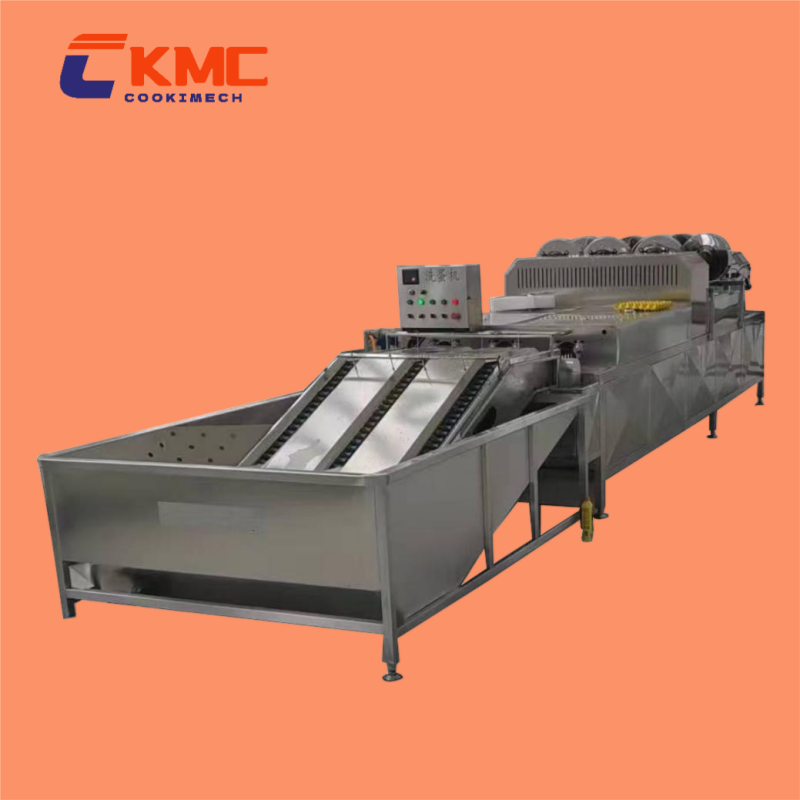
Core Components and Operation of an Egg Washing Machine
Modern egg washing machines integrate rotating brush systems, high-pressure spray nozzles, and precision temperature controls to remove contaminants while preserving shell integrity. Key components include:
- Food-grade stainless steel construction to prevent corrosion and meet hygiene standards
- Recirculating water filtration that removes debris during continuous operation
- Programmable logic controllers (PLCs) to automate cycle timing and chemical dosing
These systems process up to 20,000 eggs per hour in commercial facilities, maintaining uniform pressure below 15 psi to avoid hairline fractures during scrubbing.
The Integrated Cleaning Process: Wash, Rinse, Sanitize, and Dry
A four-stage sequence ensures microbial safety:
- Pre-wash with 40–45°C water loosens organic matter
- Detergent wash using alkaline solutions (pH 11–12) dissolves cuticle debris
- Sanitization with chlorine (50–200 ppm) or peracetic acid eliminates 99.9% of Salmonella
- Forced-air drying at 50–55°C prevents moisture-related bacterial regrowth
This closed-loop system reduces water usage by 30% compared to manual washing through smart flow management and recirculation.
Superior Sanitation Consistency Compared to Manual Methods
Automated systems achieve 92% pathogen reduction consistency (Ponemon 2023), versus 68% in manual operations, by eliminating human error in detergent concentration, rinse completeness, and drying duration. Temperature-controlled chambers maintain sanitizer efficacy within ±1°C tolerances – precision unattainable in large-scale manual processing.
Stages of Commercial Egg Washing in Tunnel-Type Egg Washing Machines
Tunnel-type egg washing machines streamline commercial processing through four critical stages that combine mechanical action with precise environmental controls, ensuring thorough decontamination at high throughput.
Step-by-Step Breakdown: Pre-Wash, Detergent Wash, Sanitization, and Drying
The whole cleaning process starts off with what we call the pre-wash stage. Here, eggs get sprayed with water at room temperature to knock off any dirt or bits that aren't stuck on there. Next comes the main wash area where things get serious. The eggs go through a bath of warm detergent solution around 45 to 55 degrees Celsius (that's roughly 113 to 131 Fahrenheit). This special alkaline mix breaks down all those stubborn organic residues that just won't come off otherwise. After that comes the really important part for safety reasons. We apply chlorine solutions somewhere between 50 and 200 parts per million. This knocks out almost all the bad stuff on the surface, getting rid of about 99.9 percent of harmful bacteria. Lastly, there's the drying phase. Hot air blows over the eggs at temperatures ranging from 43 to 49 degrees Celsius (around 109 to 120 Fahrenheit). This helps dry them properly so no moisture remains that could let bacteria grow back later on.
High-Efficiency Spray Nozzles and Recirculating Filtration Systems
- Multi-angle spray nozzles deliver 18–25 liters/min of cleaning solution per meter of conveyor width
- Three-stage filtration removes particulate matter >50 microns from recirculated water
- Self-cleaning strainers maintain consistent flow rates while minimizing water waste
These features collectively reduce water consumption by 30–40% compared to older spray-bar designs.
Adjustable Temperature and Timing Controls for Optimal Microbial Reduction
Modern machines allow operators to program key parameters to meet both USDA AMS 56.201 standards and facility-specific protocols:
| Parameter | Typical Range | Microbial Impact |
|---|---|---|
| Detergent temperature | 45–55°C (113–131°F) | Effectively dissolves cuticle debris |
| Sanitizer contact time | 15–45 seconds | Achieves 3-log Salmonella reduction |
| Drying air velocity | 8–12 m/s (26–39 ft/s) | Limits surface moisture to <2% |
Reducing Bacterial Contamination with Automated Egg Washing Machine Systems
Common Pathogens on Eggshells: Salmonella and Other Risks
The outer layer of eggs isn't sterile at all - it actually has lots of tiny microbes living on it. Among these, Salmonella and Escherichia coli stand out as particularly dangerous when it comes to making people sick from contaminated food. Recent tests done in 2024 across various chicken farms revealed something concerning: about one in ten egg shells had Salmonella present, and nearly two thirds carried some amount of E. coli bacteria. What makes this really problematic is how these harmful bugs can work their way into the inside of the egg through those super small holes in the shell surface. Once inside, they start breaking down the egg much faster than normal, which means spoiled eggs show up quicker and pose serious health threats to anyone who eats them without proper cooking.
How Egg Washing Machines Extend Shelf Life Through Contamination Control
Automated systems combine brush scrubbing, heated detergent sprays (45–50°C), and ozone or chlorine sterilization to reduce bacterial loads by 99.8% compared to manual washing (Journal of Food Protection, 2023). By removing biofilm-forming bacteria, these machines extend shelf life by 30–40 days while maintaining USDA-grade quality.
Chlorine-Based Sanitizers: Effectiveness and Regulatory Considerations
Chlorine-based sanitizers at 50–200 ppm concentrations are proven to reduce Salmonella survivability by 92% in controlled trials. However, compliance varies by region – for example, the EU limits residual chlorine to 0.5 ppm on egg surfaces. Modern equipment includes real-time monitoring and adjustable dosing to maintain efficacy while meeting regulatory requirements.
Automated vs. Manual Egg Washing: Advantages in Hygiene and Efficiency
Why Automated Egg Washing Outperforms Traditional Hand-Washing Methods
Automated systems standardize water temperature (40–50°C), spray pressure (15–25 psi), and sanitizer concentration, eliminating variability inherent in manual methods. Calibrated nozzles and timed cycles ensure consistent coverage, achieving 99.8% microbial reduction. Facilities using automation have reduced Salmonella contamination by 73% compared to manual operations, while processing 500–800 eggs per minute.
Food-Grade Materials and Enclosed Systems Reduce Cross-Contamination Risk
Constructed from stainless steel with NSF-certified seals, modern machines resist biofilm formation – a common issue in manual stations. Enclosed tunnel designs limit airborne contamination, reducing recall risks by 52% (FDA Food Safety Report 2024). Additionally, 85% of wash water is filtered and recirculated, supporting both hygiene and sustainability goals.
Compliance with Food Safety Regulations Using Egg Washing Machines
Modern egg washing machines help processors meet FDA and USDA requirements through precision control, documentation, and traceability.
Meeting FDA and USDA Standards for Egg Washing Temperatures and Detergents
The systems keep wash water at around 110 to 120 degrees Fahrenheit, which is way hotter than what most people do manually according to USDA standards. At these temperatures, cleaning agents work better and meet the FDA requirements for chlorine levels between 50 and 200 parts per million. The built-in sensors watch everything closely and catch problems right away. According to the 2022 FDA Food Code, this actually fixes about a third of all sanitation issues that happen because humans make mistakes during regular washing procedures.
Documentation and Traceability Support in Modern Egg Washing Machine Processing Systems
Modern equipment creates digital records for things like wash cycles, chemical levels, and microbial tests, meeting those tricky FSMA regulations found in 21 CFR Part 117. These cloud linked systems store all this info automatically for well over two years, which is way beyond what most places require (usually just 12 months). Plus they cut down on paperwork time by around 40% when compared to old fashioned paper logs. According to the FDA Egg Safety Report from 2023, these automated systems pretty much wipe out about 89% of problems related to temperature control that happen during manual operations. Best part? All this creates solid evidence showing proper food safety practices were actually followed during inspections.
FAQ
What are the core components of an egg washing machine?
Egg washing machines typically include food-grade stainless steel construction, recirculating water filtration, and programmable logic controllers (PLCs) for automation.
How does an egg washing machine ensure food safety?
Egg washing machines follow a four-stage sequence: pre-wash, detergent wash, sanitization, and drying, to ensure microbial safety and reduce water usage.
What are the advantages of automated egg washing?
Automated egg washing achieves higher pathogen reduction consistency, reduces human error, standardizes critical factors like temperature, pressure, and sanitizer concentration, and meets food safety regulations efficiently.
What pathogens are commonly found on eggshells?
Eggshells frequently contain pathogens such as Salmonella and Escherichia coli, which can pose health risks if not properly monitored and treated.
How do egg washing machines extend the shelf life of eggs?
Egg washing machines reduce bacterial loads significantly and enhance contamination control, extending egg shelf life by up to 40 days while maintaining quality.
Table of Contents
- Understanding the Functionality of an Egg Washing Machine in Food Safety
- Stages of Commercial Egg Washing in Tunnel-Type Egg Washing Machines
- Reducing Bacterial Contamination with Automated Egg Washing Machine Systems
- Automated vs. Manual Egg Washing: Advantages in Hygiene and Efficiency
- Compliance with Food Safety Regulations Using Egg Washing Machines
- FAQ