 EN
EN

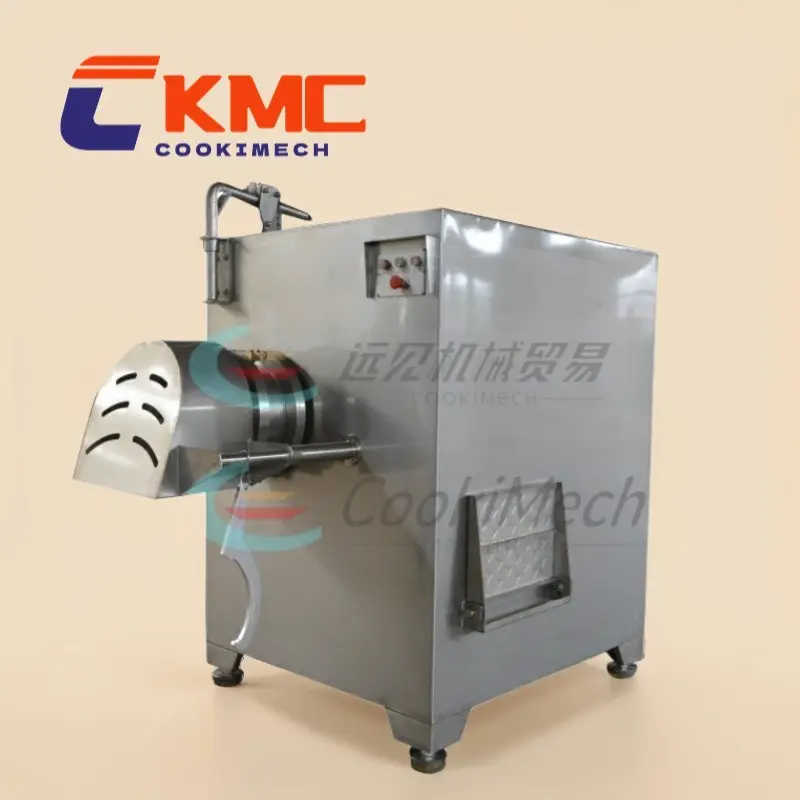
Understanding Integration of Industrial Meat Grinders in End-to-End Processing Lines
Today's meat processing facilities depend heavily on how well different machines work together, especially since the big industrial grinders are basically at the heart of most operations. According to FoodTech Insights from last year, these setups can handle around 12 metric tons every hour, linking up the deboning areas with the mixers while keeping temperatures just right throughout. The real advantage comes from handling such large volumes continuously. Plants using this setup typically see about a third less downtime between steps compared to older batch methods, which makes a huge difference when trying to keep production running smoothly day after day.
Core Functions and Operational Benefits in Large-Scale Meat Production
Meat grinders used in industrial settings actually do three main things for processing operations. They break down particles into smaller sizes, help mix fat throughout the product, and change how proteins are structured during grinding. Some newer machines come equipped with blades that keep themselves sharp for thousands of hours of operation, sometimes lasting well over 8,000 hours before needing replacement. These advanced units typically have stainless steel parts that meet USDA standards, which studies from the Global Food Safety Report show can cut down on bacteria problems by about 91%. When facilities switch to these automated systems, they save money on labor costs too. For every ton processed, companies typically see savings around $18 per ton, plus better consistency in their final product yields across batches.
Positioning the Industrial Meat Grinder Within the Hierarchy of Essential Meat Processing Equipment
When looking at how factories spend their money on equipment, industrial meat grinders usually come right behind thermal processing units and quality scanners. These machines sit nicely between the main cutting area and where flavors get added, acting as an important spot to check if everything looks consistent in texture. The location really matters these days because about 4 out of 10 processing plants work with both regular meat products and those weird plant-based substitutes. That means the grinders need to handle all sorts of different materials, from tough cuts of beef to softer vegetable proteins without messing things up.
Maximizing Efficiency and Throughput with High-Capacity Grinding Systems
How Industrial Meat Grinders Enhance Efficiency, Hygiene, and Scalability
Industrial meat grinders today cut down processing time around 30% faster than old fashioned hand methods without compromising on cleanliness. Made from durable stainless steel and featuring automatic wash programs, these machines help keep bacteria at bay. And let's face it, this matters a lot when we're talking about food safety issues that can burn through $740,000 each year for companies dealing with product recalls according to recent FDA numbers. What makes them really valuable though is how they work together with other machinery like deboners and mixers. One person can now manage what used to take several workers across different stations, which saves both time and money in real world operations.
Quantifying Throughput Improvements Using High-Capacity Industrial Meat Grinders
According to research conducted in 2023 across twelve different processing facilities, switching out old equipment for industrial strength grinders boosted output by around 740 pounds per hour for each machine. Plants that process more than five thousand pounds a day typically saw their money back within eighteen months thanks to lower staffing expenses and less wasted product during processing. The latest high capacity machines from top brands can actually work with frozen meat chunks stored at minus four degrees Fahrenheit while still maintaining consistent grinding quality. This solves one of those pesky problems that has plagued frozen food producers for years.
Case Study: Output Gains at a European Plant Using Advanced Grinding Systems
One Polish food processing plant saw its weekly production jump nearly 40% when they installed a new 25 horsepower grinding system made by a top Chinese equipment maker. With this upgrade, the facility could now grind and mix around 5,000 pounds of seasoned meat mixtures every hour, and what's really impressive is that they got almost perfect results too - about 98% consistency in particle size between different batches. The improved efficiency didn't just mean faster processing times either. Their electricity bill dropped significantly as well, cutting down energy usage by roughly 22 kilowatt hours for each ton of product going through the system.
Automation and Real-Time Monitoring Trends in Modern Grinding Technology
Modern grinders are starting to come equipped with IoT sensors these days. These little devices keep tabs on things like how hard the motor is working, when blades start getting worn down, and what the internal meat temperature actually is while processing. The info collected gets sent to those smart maintenance programs we hear so much about lately. According to research from the University of Nebraska back in 2024, such systems can cut unexpected breakdowns by around a quarter. Pretty impressive stuff! And don't forget about the cloud connection part either. When connected properly, these systems will tweak the grinding pressure all by themselves depending on how fatty the meat batch happens to be. That helps maintain that consistent texture customers expect, no matter what kind of raw materials show up at the plant door each morning.
Ensuring Consistent Product Quality Through Precision Grinding Technology
Impact of Grinding Processes on Texture, Fat Distribution, and Overall Meat Quality
The way meat gets ground really affects how it feels and tastes when we eat it. Most industrial grinders can get fat distribution within about 2% accuracy thanks to their specially designed blades, which makes all those burgers and sausages taste pretty much the same every time. Recent research from the Meat Processing Research Consortium back in 2023 showed something interesting too. When they looked at better grinding methods, they noticed temperatures didn't spike as much during processing as with regular equipment. This matters because lower heat helps keep the muscle fibers intact, so the final product stays tender and juicy instead of getting tough or rubbery.
Mechanical Changes in Meat Structure During Industrial Grinding
High-torque motors in industrial systems apply 30â50 psi of hydraulic pressure during primary grinding, elongating muscle fibers without pulverizing connective tissues. This controlled deformation creates the ideal matrix for moisture retention, with advanced grinders maintaining particle sizes within 1.5â2.3 mm for uniform cooking performance.
Optimizing Pressure and Shear Forces for Superior Ground Meat Consistency
Leading manufacturers now integrate real-time viscosity sensors that automatically adjust auger speeds, maintaining shear rates between 120â150 sâ·¹. This prevents over-processing while ensuring 98% particle uniformity across batchesâa key factor in meeting USDAâs strict commercial foodservice specifications.
Data Comparison: Uniformity in Ground Beef from Industrial vs. Commercial Grinders
| Metric | Industrial Grinders | Commercial Units |
|---|---|---|
| Fat Distribution CV% | 2.8 | 7.1 |
| Particle Size SD | 0.3mm | 0.9mm |
| Temperature Rise | 8°F | 22°F |
Source: 2024 National Meat Processorâs Association Equipment Benchmark Report
Advancing Food Safety and Hygiene in Industrial Meat Grinder Design
Critical Hygiene Standards for Meat Processing Equipment in Regulatory Compliance
Today's industrial meat grinders need to follow strict cleaning rules set out by international food safety organizations. According to the latest Meat Processing Equipment Standards Report from 2024, almost nine out of ten contamination problems come from parts of the grinder that weren't cleaned properly. Big name manufacturers are now using stainless steel surfaces where meat touches and have automatic cleaning systems built right into their machines. This approach cuts down on harmful microbes by around two thirds when compared to older models, as shown in research by MetaTech last year. The regulations actually require specific cleaning procedures and special coatings that resist bacterial growth so companies can pass both USDA and European Union inspections for food safety.
Sanitary Design Innovations in Industrial Meat Grinder Construction
Modern grinders come equipped with removable grinding plates and smooth welds that help keep bacteria from hiding out. One neat advancement we've seen lately is self-lubricating bearings which stop grease from getting into the product. Processing plants report around 95% fewer problems related to lubricants since these were introduced based on their internal checks. Many operations now use sealed grinding systems with built-in air jets that blow away debris during operation. This keeps things running non-stop without compromising cleanliness, something absolutely essential for meat processors dealing with over 10 tons of product each day across multiple shifts.
Addressing Biofilm Risks and Mitigation Strategies in Continuous-Use Grinders
| Risk Factor | Conventional Grinders | Modern Solutions | Contamination Reduction |
|---|---|---|---|
| Blade crevices | 78% biofilm presence | Laser-polished edges | 82% |
| Motor housing gaps | 2.4 CFU/cm² | IP69K-rated enclosures | 91% |
| Meat residue buildup | 12% product loss | Auto-flush systems | 96% |
Advanced models combat biofilm formation through UV-C light arrays and antimicrobial auger coatings, proven to suppress Listeria growth by 99.8% in 72-hour stress tests. Facilities adopting these strategies report 40% fewer sanitation shutdowns, crucial for maintaining throughput in 24/7 operations.
Innovation and Future Trends Reshaping Industrial Meat Grinding
Emerging technologies: Vacuum filling, high-shear grinding, and frozen meat processing
Modern industrial meat grinders now integrate cutting-edge technologies to address evolving market demands. Three innovations stand out:
- Vacuum filling systems eliminate air pockets during processing, improving product shelf life by 18â22% (Food Safety Magazine 2023)
- High-shear grinding enables precise particle size control, achieving 97% consistency in fat distribution across batches
- Frozen meat processing capabilities reduce thawing-related bacterial growth risks while maintaining texture integrity
Leading manufacturers are adopting IoT-enabled sensors to optimize these technologies, reducing energy waste by 30% in continuous operations.
AI-driven diagnostics and predictive maintenance in next-gen grinders
Advanced AI algorithms now analyze 200+ operational parameters in industrial meat grinders, from motor torque patterns to blade wear rates. This enables:
- 85% faster detection of mechanical inefficiencies
- Predictive maintenance alerts 72 hours before potential failures
- Dynamic adjustments to grinding pressure based on meat type and fat content
A 2023 Verified Market Reports study shows plants using these systems achieve 41% fewer unplanned downtime incidents compared to conventional grinders.
Balancing automation with artisanal quality expectations in industrial settings
While automation dominates modern meat processing, 68% of premium producers now demand grinders with adjustable shear rates and customizable plate configurations. This hybrid approach allows large-scale operations to replicate small-batch textural characteristics while maintaining FDA-compliant throughput levels of 8â12 tons/hour. Recent designs incorporate:
- Modular attachments for collagen-rich or plant-based protein blends
- Self-cleaning mechanisms that reduce cross-contamination risks by 93%
- HACCP-certified lubrication systems compatible with 100°C sanitation cycles
As global meat production scales to 365 million metric tons (FAO 2023), these innovations ensure industrial grinders meet both efficiency targets and evolving culinary standards.
FAQ
What are the key benefits of using industrial meat grinders?
Industrial meat grinders improve efficiency by processing high volumes quickly, reduce labor costs, enhance product consistency, and lower the risk of contamination through automated systems.
How do industrial meat grinders ensure food safety?
They incorporate stainless steel parts, automatic cleaning systems, and advanced technical designs that meet international regulations to minimize contamination risks.
What are the recent technological advancements in industrial meat grinding?
Recent advancements include IoT sensors for real-time monitoring, AI-driven diagnostics, vacuum filling systems, and high-shear grinding for improved particle consistency and energy efficiency.
Why is the placement of meat grinders important in processing facilities?
Placement ensures efficient flow and consistency between cutting and seasoning processes, and is crucial for facilities dealing with diverse materials like plant-based proteins.
Table of Contents
- Understanding Integration of Industrial Meat Grinders in End-to-End Processing Lines
- Core Functions and Operational Benefits in Large-Scale Meat Production
- Positioning the Industrial Meat Grinder Within the Hierarchy of Essential Meat Processing Equipment
-
Maximizing Efficiency and Throughput with High-Capacity Grinding Systems
- How Industrial Meat Grinders Enhance Efficiency, Hygiene, and Scalability
- Quantifying Throughput Improvements Using High-Capacity Industrial Meat Grinders
- Case Study: Output Gains at a European Plant Using Advanced Grinding Systems
- Automation and Real-Time Monitoring Trends in Modern Grinding Technology
-
Ensuring Consistent Product Quality Through Precision Grinding Technology
- Impact of Grinding Processes on Texture, Fat Distribution, and Overall Meat Quality
- Mechanical Changes in Meat Structure During Industrial Grinding
- Optimizing Pressure and Shear Forces for Superior Ground Meat Consistency
- Data Comparison: Uniformity in Ground Beef from Industrial vs. Commercial Grinders
- Advancing Food Safety and Hygiene in Industrial Meat Grinder Design
- Innovation and Future Trends Reshaping Industrial Meat Grinding
- FAQ